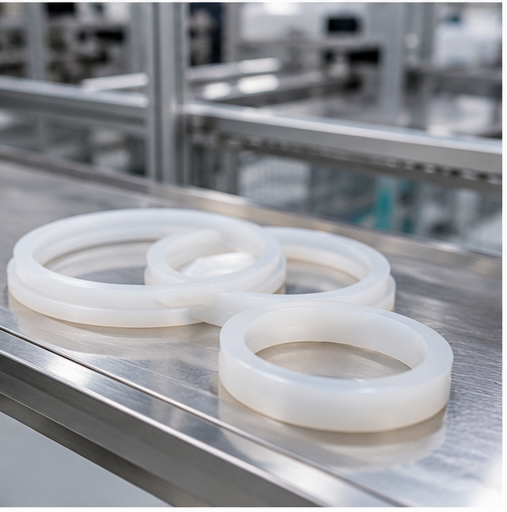
Food-Grade Sealing Solutions: What the F&B Industry Needs to Know
Food and beverage processing demands a different class of sealing products. Beyond mechanical performance, seals must be safe for food contact, easy to clean, and able to withstand aggressive washdown and sterilization processes.
Material selection starts with compliance. Food-grade silicone and EPDM dominate sanitary applications, offering FDA compliance, taste-and-odor neutrality, and resistance to hot water and CIP (Clean-in-Place) chemicals. NBR and FKM remain options where oil contact and higher chemical resistance are required.
Hygienic design is just as important as the material. Seals for food equipment should feature smooth, crevice-free surfaces that prevent bacterial harborage and allow complete drainage. This is why many food-grade seals use rounded profiles and specific surface finishes.
Temperature cycling is the toughest test in this industry. Seals must survive steam sterilization at 120°C and above, then return to cold product temperatures — sometimes many times per day. Silicone and EPDM compounds handle this thermal cycling better than most alternatives.
Working with a manufacturer that understands sanitary requirements — from cleanroom production to full material traceability — ensures your sealing components pass both regulatory review and the realities of daily production.