
Our Blog
Guides, tips, and industry knowledge on sealing solutions for automotive, aerospace, and general industries.
Six Sigma Quality and Process Capability — What It Really Means for O-Rings
What Six Sigma Quality means in the O-ring industry, how process capability (Cp) is measured, and why a vendor's Cp score matters more than a brochure.
Elastomer Materials for O-Rings — Comparing FFKM, FKM, EPDM, NBR, VMQ and More
A side-by-side reference of the eight commonly used O-ring elastomers — Simriz FFKM, ETP, Aflas TFE/P, FKM, EPDM, NBR, silicone VMQ, and fluorosilicone FVMQ — covering temperature range, properties, and chemical compatibility.
Extrusion Gap and Other Groove Details — Designing O-Ring Grooves That Do Not Fail Under Pressure
How to keep an O-ring from extruding into the bore-rod gap, plus recommendations on wall angle, edge break, surface finish, groove radius, and installation chamfers.
Compression Squeeze, Compression Ratio, and Gland Fill — The Three Numbers That Decide Whether Your O-Ring Seals
How to compute compression squeeze, compression ratio, and gland fill for static O-ring seals — including ID-stretch cross-section correction tables and target ranges.
ID Stretch and OD Interference — Sizing the O-Ring to the Hardware
How to choose an O-ring ID or OD to minimise installation damage and wear in piston, rod, and face type seals — including allowable stretch and interference percentages.
Gland Dimension Calculations — How to Size the Hardware Around an O-Ring
How to compute gland height (H) and gland width (W) for piston, rod, and face type O-ring seals, plus how to read the O-ring dimensions diagram.
What Is an O-Ring? A Practical Introduction to Static Sealing
A beginner-friendly overview of O-rings, why the term "compression" is used instead of "deformation", and the three fundamental gland types used in static sealing.
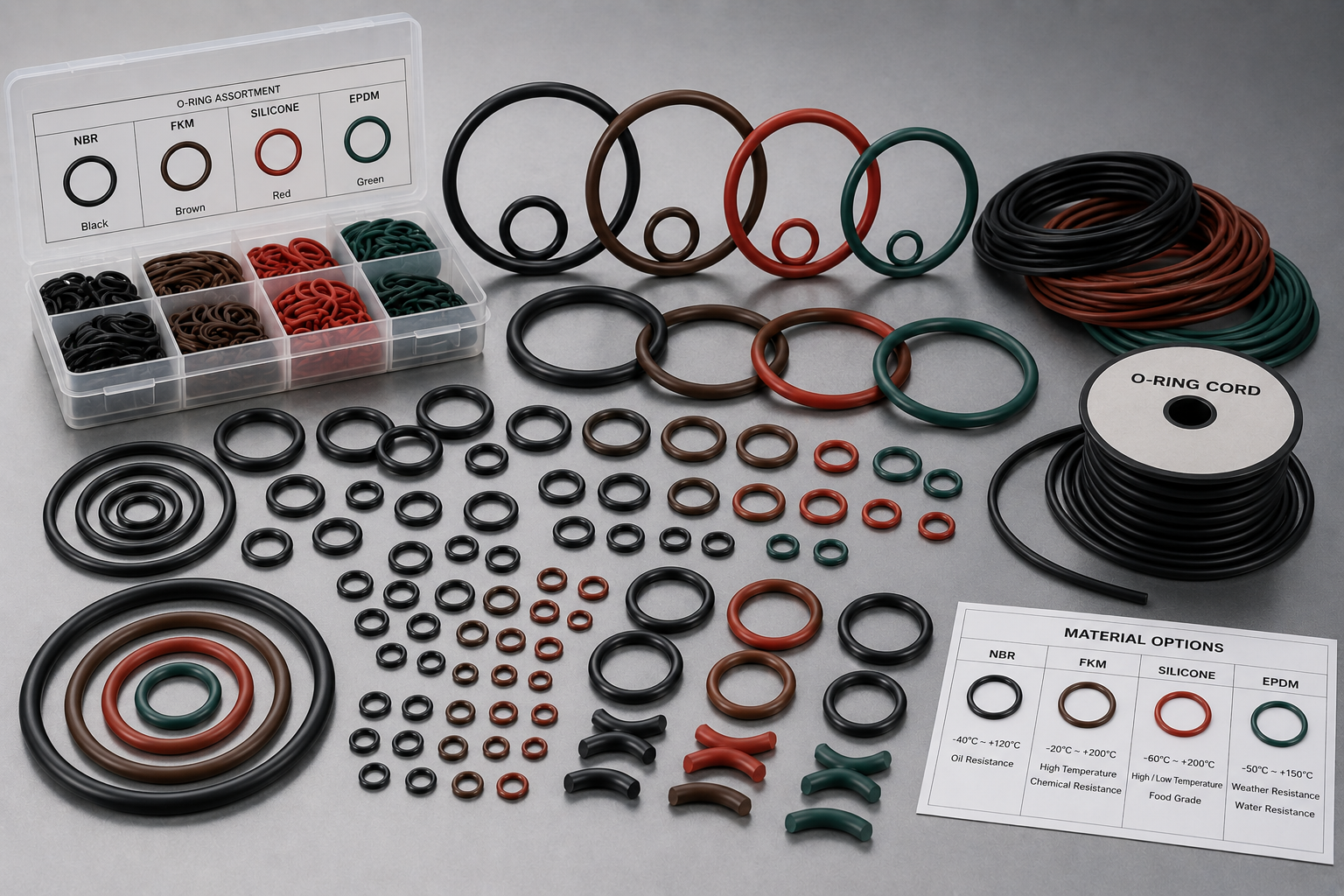
How to Choose the Right O-Ring Material for Your Application
NBR, FKM, EPDM, or silicone? A practical guide to matching O-ring materials with your operating environment — temperature, media, and pressure.

Understanding Oil Seal Types: TC, EC, VA/VS and More
From TC double-lip seals to cassette seals — how each oil seal design works and which applications they suit best.

5 Common Causes of Seal Failure and How to Prevent Them
Most seal failures are preventable. Learn the top failure modes — from improper installation to chemical attack — and how to avoid them.
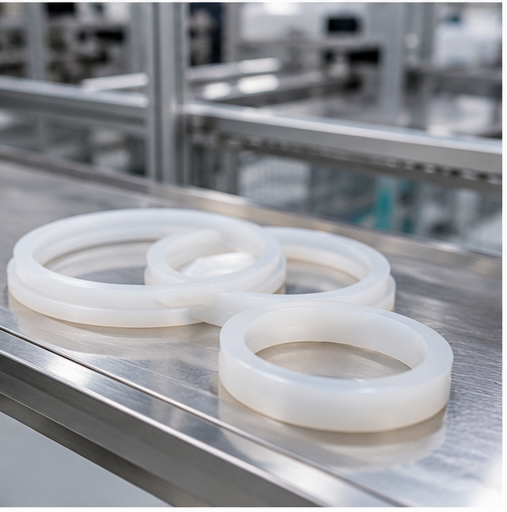
Food-Grade Sealing Solutions: What the F&B Industry Needs to Know
FDA-compliant silicone seals, hygienic design, and cleanroom manufacturing — the essentials of sanitary sealing for food and beverage processing.