How to Choose the Right O-Ring Material for Your Application
O-rings are among the most widely used sealing elements in industrial equipment, yet choosing the wrong material is the single most common cause of premature seal failure. The right material must withstand your specific combination of temperature, chemical media, and pressure — no single compound works for everything.
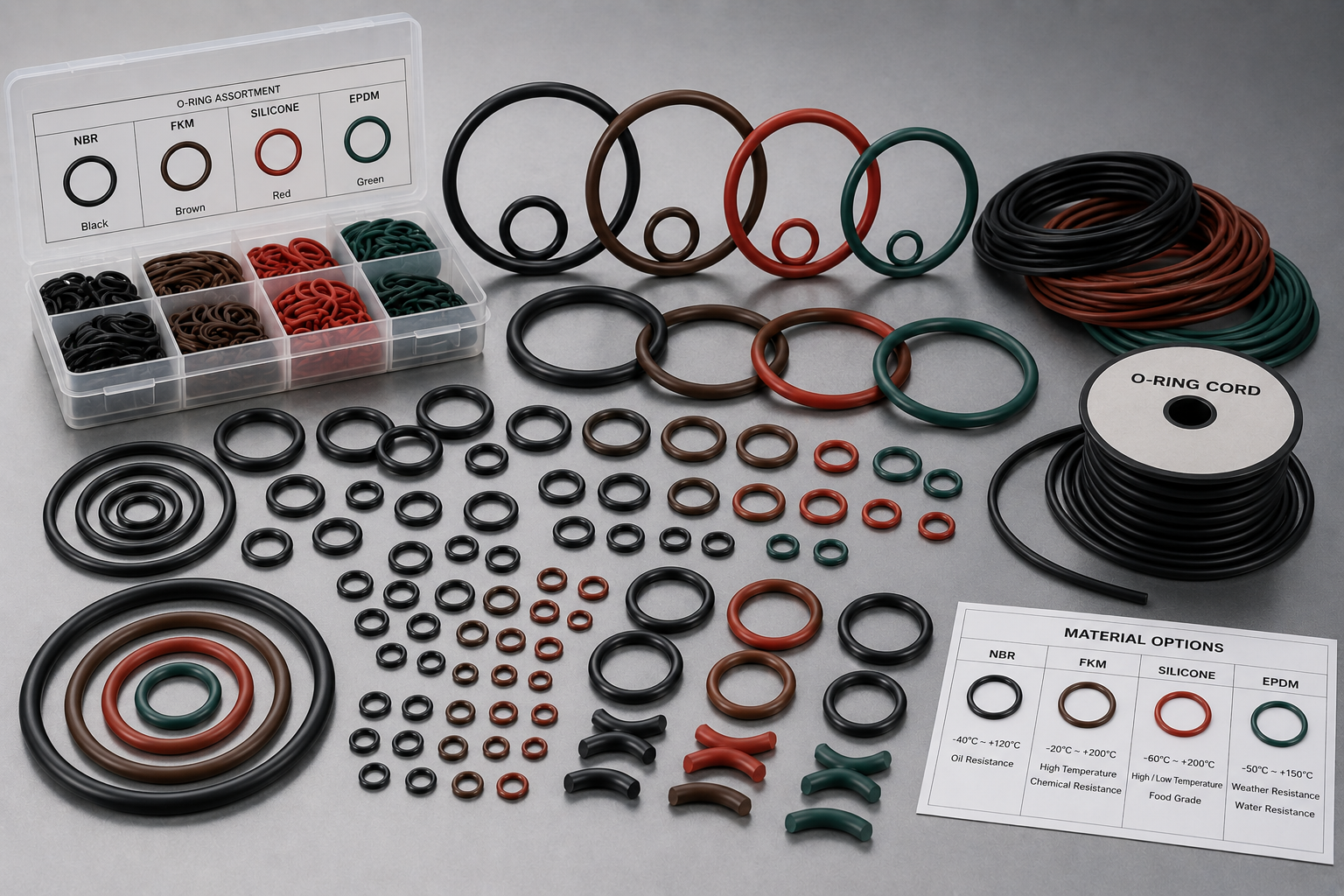
NBR (Nitrile Rubber) is the most economical and versatile option, offering excellent resistance to oils, fuels, and hydraulic fluids. With a typical operating range of -30°C to +120°C, it is the go-to choice for general industrial and automotive oil applications where cost matters.
FKM (Fluorocarbon, also known as Viton) is the premium option for demanding environments. It resists temperatures up to 200°C and beyond, along with aggressive chemicals, fuels, and solvents. Aerospace, chemical processing, and high-performance engines rely on FKM when NBR simply cannot survive.
EPDM excels in hot water, steam, and outdoor weather exposure, making it ideal for water systems and HVAC — but it must never be used with mineral oils, which cause rapid swelling. For special requirements, HNBR adds strength and heat resistance, silicone offers extreme low-temperature flexibility and food safety, and FFKM covers the most extreme chemical environments.
The practical approach is simple: define your media, temperature range, and pressure first, then select the material that covers all three with margin. When in doubt, consult your seal manufacturer with your exact operating conditions — and always validate the selection with application testing before full production.